
A skip may be placed on grass only when the operator agrees the ground and vehicle route are firm, level and safe. Expect marking or sinking, particularly after rain or with heavy waste. A hard private surface is usually easier to assess.
The quick answer about placing a skip on grass
A skip may be placed on grass only when the operator agrees the ground and vehicle route are firm, level and safe. Expect marking or sinking, particularly after rain or with heavy waste. A hard private surface is usually easier to assess.
A good decision should be based on the real job rather than a headline number or a guess. For placing a skip on grass, the delivery postcode, waste type, amount, access and proposed placement all provide useful context. Clear details at the beginning make the quote easier to understand and reduce changes later.
Start with the job, not the container
Check how firm the ground remains after several wet days, not only when dry. Identify slopes, buried services, drains and septic systems. Ask whether load-spreading protection is suitable and accept that grass may need repair afterwards.
Think about the order of work as well as the final pile. Waste produced over several days needs a different plan from a clearance that is already waiting at ground level. Note who will load it, how far each item must travel and whether the route will still be clear when collection is due. This simple preparation is especially useful for Scottish flats, tenements, terraces, rural properties and busy commercial sites.
Choose a skip size by volume and weight
A compact skip with a controlled light load is easier to place than a large container of soil or rubble. RoRo containers normally need properly prepared commercial hardstanding rather than an ordinary lawn.
Bag counts and cubic-yard names are visual guides, not guarantees. Bulky furniture and timber use volume quickly, while soil, stone, tiles and concrete can reach a safe transport limit before a skip looks full. Compare the 2, 4, 6 and 8 yard skip pages for common domestic work, then use the large-skip and RoRo guides only when the waste and site genuinely suit them.
Check access, placement and council permission
The lorry must reach the grass without crossing weak paving, kerbs or a neighbour’s land. The final position must stay level and accessible. Roadside verges may be public land and can require council permission.
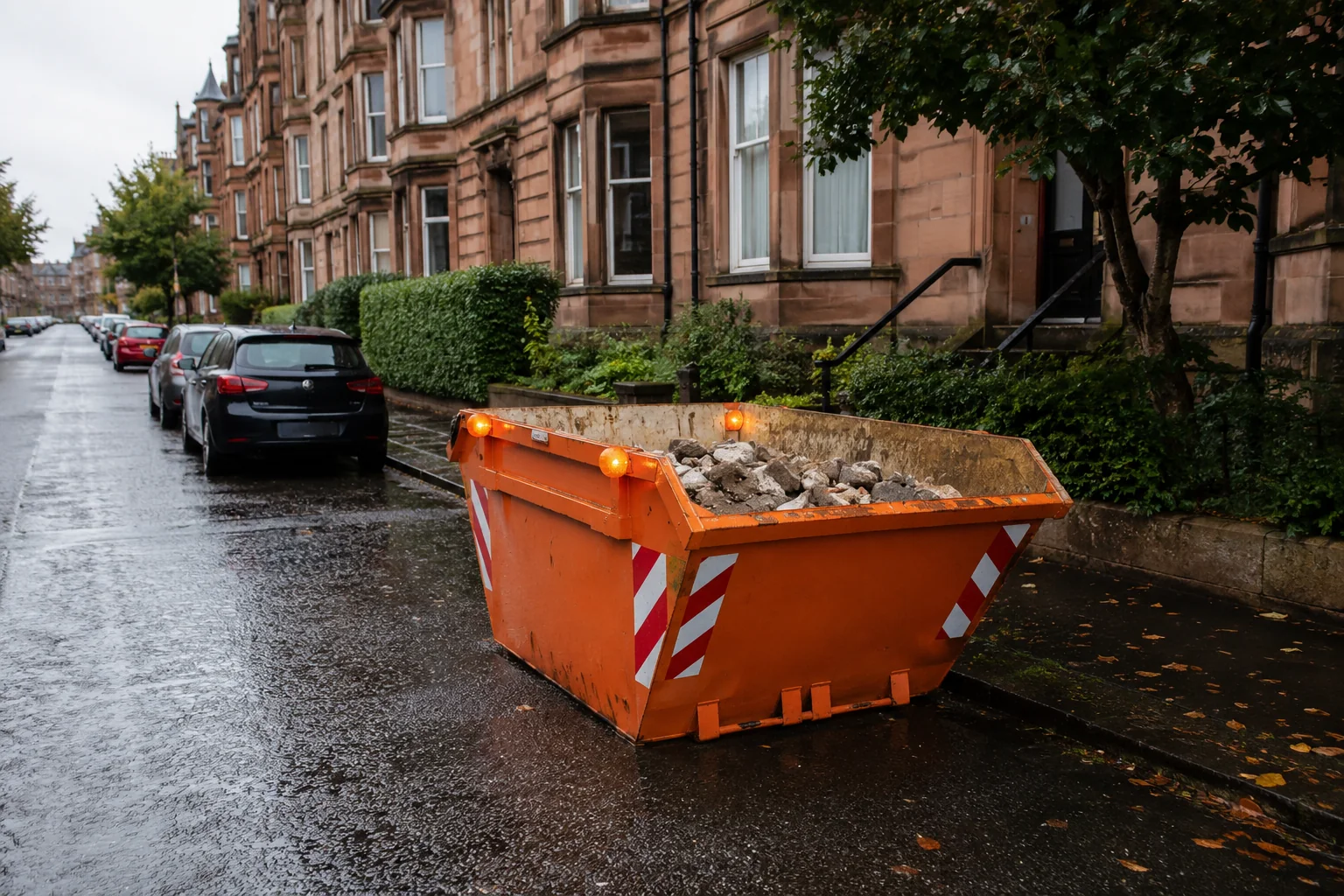
The lorry needs more room than the skip. Check the approach, gates, parked cars, bends, slopes, paving, drains, trees and overhead cables. A container fully on suitable private land normally avoids a road permit. Public roads, pavements, verges and controlled bays are different: the relevant council decides the application, dates, safety conditions and fees. Always use current official information for the local authority.
Keep every waste type on the right route
Soil, stone, bricks and concrete create dense loads that can sink into soft ground. Tell the operator the exact material. Rainwater and wet green waste can also increase weight during the hire.
Never hide an item under ordinary waste. A contaminated or unsafe load can be refused at collection or at the receiving facility. Ask before loading plasterboard, mattresses, upholstered seating, electrical items, fridges, tyres, paint, oil, batteries and gas cylinders. Suspected asbestos needs competent specialist advice and must never enter an ordinary skip. Use a registered waste transporter and retain the booking details.

Compare the complete quote
Discuss surface risk and alternative placements before paying. A slightly longer carrying route to a firm drive may be better than damage, failed collection or ground recovery work.
A useful written quote identifies the service, container, waste conditions, delivery postcode, included hire period and collection arrangement. It should also explain any council cost, special-item charge or reason the final price could change. This gives customers a fair comparison and helps prevent disputes over weight, overfilling, restricted waste, failed access or extra days.
Plan delivery and collection together
Weather matters. If heavy rain changes the ground before delivery, call. Monitor the position during hire and keep the collection route free, but never attempt to jack up or move the skip yourself.
Keep the delivery route clear on the first day and again when the skip is full. Collection vehicles may follow planned routes, so request uplift with enough notice and never assume it is automatic. If the skip occupies public land, the collection must fit the approved dates. Tell the operator promptly if scaffolding, parked vehicles, road works or site conditions change.
Common mistakes to avoid
Do not assume every green strip belongs to the property. Do not place over drains, utilities or recently filled ground, and do not use thin boards as a guarantee that soft ground is safe.
The safest approach is simple: provide honest information, use current local rules and stop to ask when something changes. Do not overload the container, move it after delivery, burn waste or let unknown people add material. One clear conversation before booking is usually faster and cheaper than correcting the wrong size, failed placement or unsuitable load later.
Have these details ready
- ✓Confirm private ownership
- ✓Check ground after rain
- ✓Locate drains and services
- ✓Control heavy waste
- ✓Discuss protection
- ✓Keep collection access
Check current Scottish guidance
Council rules and waste requirements can change. These links go to the public bodies responsible for the current information.